A novel off the shortlist: the 2026 Planeta Prize revives the debate over ‘unpublished’
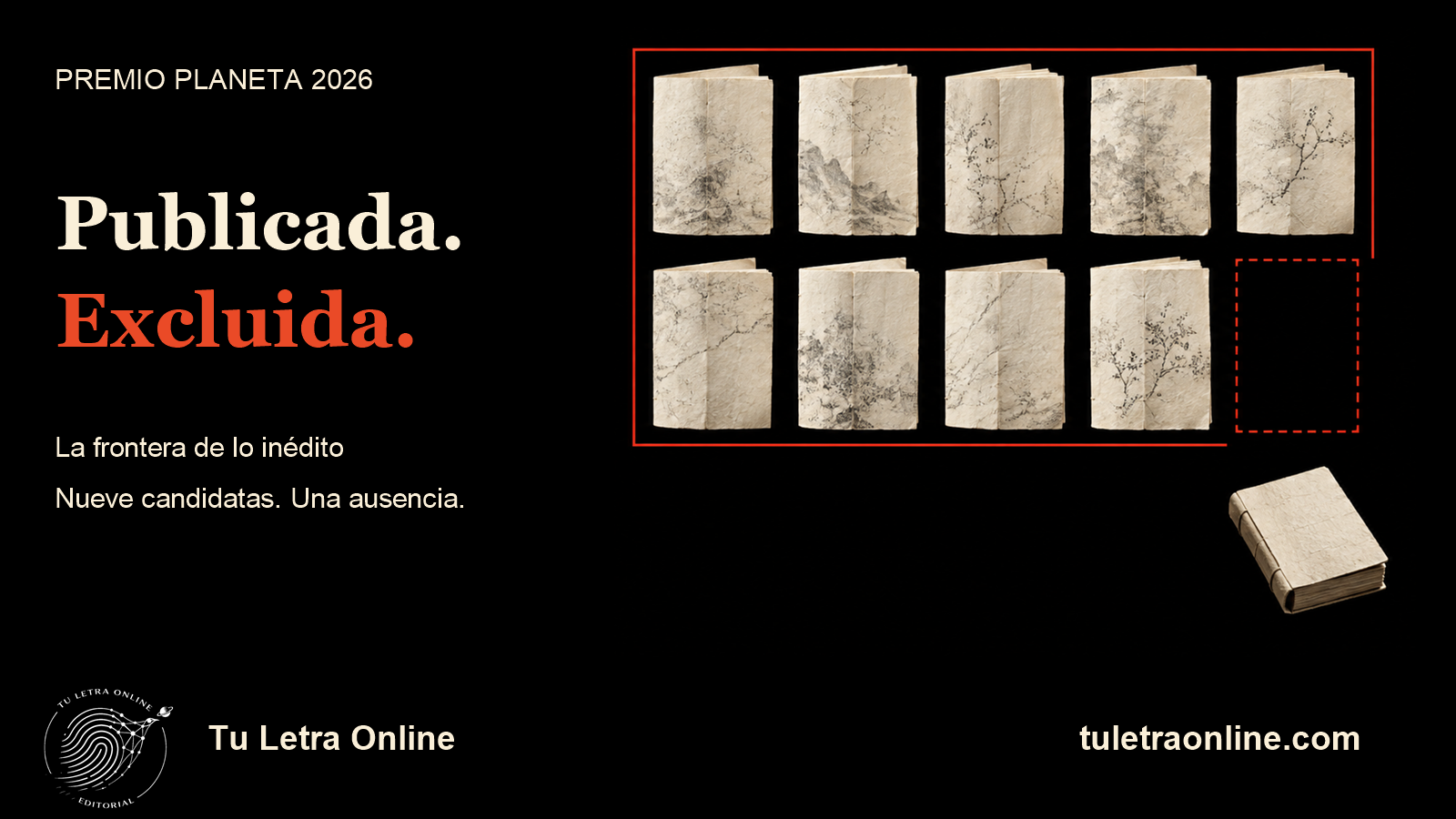
The prize has announced nine contenders ahead of its decision on 15 October. According to the organisers’ explanation, reported in today’s press, a tenth work was excluded because it had already been published. The episode opens up a discussion about competition rules and the choices authors make.
On the eve of a literary prize announcement, speculation usually centres on who will win. This year, the Planeta competition raises another question: what happens when a shortlisted novel fails to meet an entry requirement. For a moment, the news shifts attention from the writing itself to the work’s publication status.
Europa Press reported today, 14 October, that When Your Death Sets Me Free, submitted under the pseudonym Lita Rowe, will no longer be competing. The agency quotes José Creuheras, chairman of Grupo Planeta, as saying that the author had decided to self-publish the work. RTVE also reports that it was excluded because it had already been published. That's the reason the organisers have given, not a conclusion we've drawn about the author's intentions. Europa Press and RTVE.
What we can establish
The official list contains nine titles. The organisers say the winner will be announced on 15 October in Barcelona and record 1,424 entries for this year's prize. As we prepare this article, no winner has yet been announced: we're discussing the contenders and an exclusion, not the outcome. Official Planeta information.
The 2026 rules require novels to be original, unpublished and written in Spanish, and entrants must submit a declaration confirming that their work meets those conditions. This requirement appears in the competition's publicly available rules. Official 2026 rules.
A subsequent search found a book under the same title and author name. The biography published by Europa Edizioni dates its publication to September 2025; Apple Books lists an edition dated 22 September that year. These catalogue records alone can't establish whether the published text is identical to the one submitted for the prize. Publisher and Apple Books.
The descriptions also differ: RTVE links the entry to Lorca's death, while the book's sales listing sets the story in Oxford. We haven't resolved that discrepancy or found a public account of the exclusion from the author. We therefore make no claim that the work was published after being shortlisted, nor do we ascribe motives. We continue to attribute both the decision and the reason given for it explicitly to the organisers.
Publication changes a work's path, too
As publishers, we find this case interesting because it brings two paths into focus: keeping a manuscript in a selection process and making it available to readers through publication. Each may serve a different purpose. Before judging an individual's decision, it's worth understanding what commitments a competition requires.
A work can retain its literary qualities after publication yet no longer qualify for a competition reserved for unpublished work. Quality and eligibility answer different questions. The first invites us to read and discuss the text; the second depends on the competition's rules.
That distinction matters to readers, too. Exclusion alone tells us nothing about a novel's literary merit. To discuss its language, characters or structure, we'd need to examine the work. News about whether it can compete is no substitute for reading it.
The rules deserve as much clarity as the headlines
A prize creates expectations both for those who submit manuscripts and for those following the outcome. As publishers, we believe clarity should run through the whole process: straightforward requirements, consistent information and precise explanations whenever the shortlist changes.
Readers may wonder why one competition chooses to reward unpublished work while others recognise books already in print. That's a legitimate debate, and it needn't assume that every prize should operate in the same way. What matters is understanding each competition's purpose and the conditions its entrants must meet.
The rules also require entrants to declare that they didn't create the work using AI-related tools. That requirement is separate from the stated reason for this exclusion: publication. This news gives no grounds for an accusation about AI.
The discussion still to be had
At Tu Letra Online, we care about supporting authors from manuscript to readership. That's why we see this episode as a chance for an informed discussion about publishing decisions, without reducing an author's path to a headline.
On the evening of 15 October, the competition will have a winner. Today, the discussion can focus on its conditions. Upholding a rule and questioning whether it's the right one aren't contradictory: one explains how the competition works; the other asks how we'd like it to work.
What checks should take place before a shortlist is announced?
What differences would you expect between a prize for a manuscript and one for a published book?
What information should organisers provide when they remove an entry from contention?
Share your view and explain your reasoning. You're also welcome to offer another reading of the case: we want a reasoned debate, without guessing at motives we can't know.
As an Amazon Associate, the publisher earns from qualifying purchases. It costs you nothing extra.
- Premio Planeta 2026
- premios literarios
- novelas inéditas
- autopublicación
- edición
- debate literario.