Halloween and Literature: The Monsters Inside Us Keep Reading
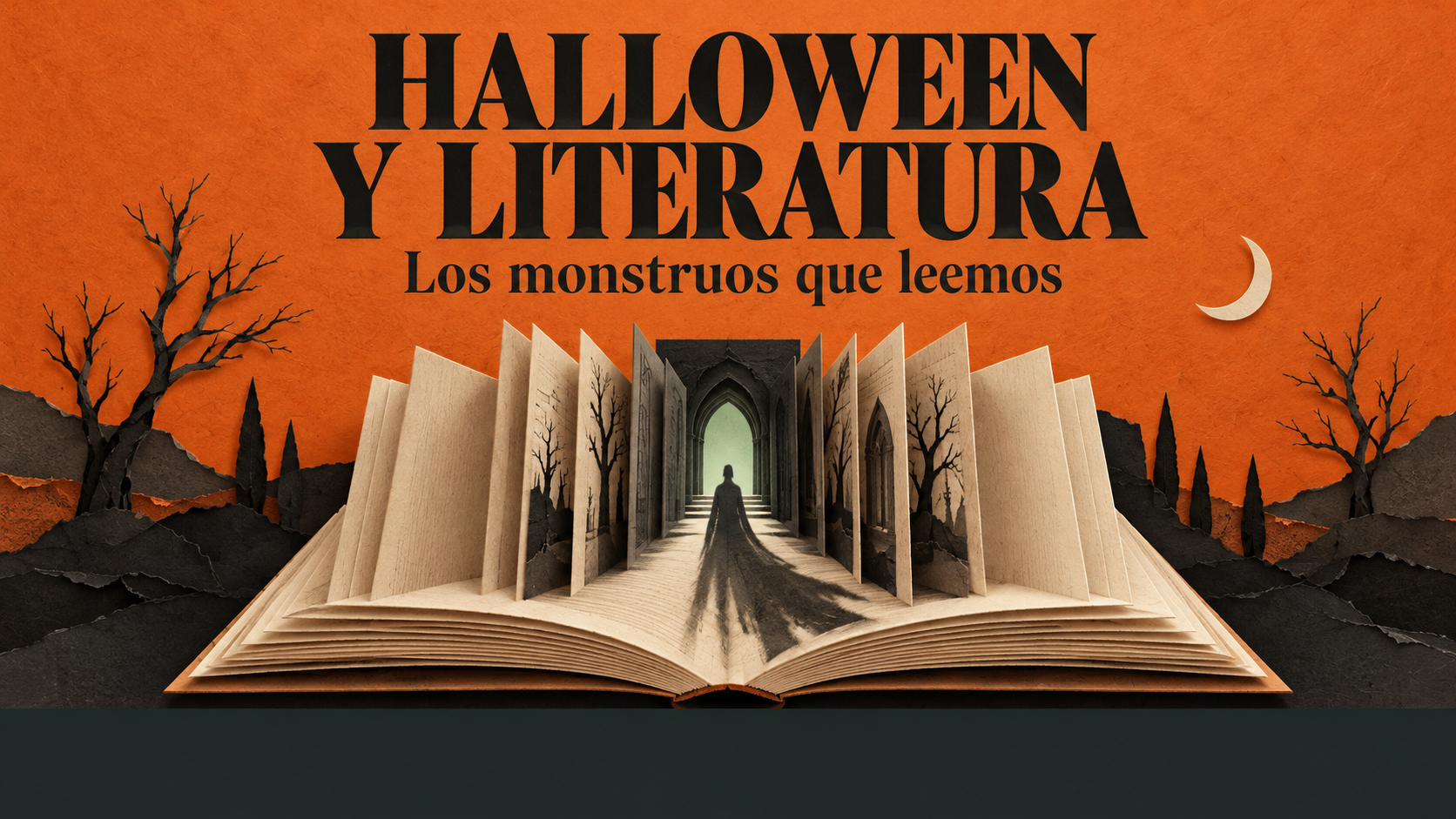
From the celebrations Robert Burns turned into poetry to the shadows of Mary Shelley, Poe and Bécquer, Halloween offers a chance to return to books and discover what lies behind our fear.
There's a moment after you close a horror story when the house seems different. The hallway is still there, the window is the same shape and no one has moved the chair. Yet something has changed: now you're listening. Literature has let an unsettling possibility into a familiar place.
As 31 October approaches, Halloween fills the streets with familiar creatures. But behind some of those figures lie stories far more troubling than the costumes suggest. Returning to the books brings back what the mask leaves out: the monster's loneliness, the storyteller's vulnerability and the reasons we're drawn to what frightens us.
The connection between Halloween and writing also has a history that predates our screen culture. In ‘Halloween’, Robert Burns depicted a rural Scottish celebration of courtship, laughter and rituals for telling the future. The poem appears in his 1786 collection, preserved in the Eighteenth-Century Poetry Archive.
Those taking part look for signs of future love in plants and nuts placed on the fire. Uncertainty becomes a game they play together. Read today, the poem reveals something that the spectacle of horror can obscure: the unknown can bring a community together, too. There's fun, anticipation and a desire to imagine together what hasn't happened yet.
That mix of attraction and fear helps us enter other literary worlds, even when the works themselves aren't set at Halloween or written to celebrate it. The festival can open the door; each book then leads us towards questions of its own.
Take Frankenstein, the novel Mary Shelley published in 1818. Her creature has changed a great deal on the way to becoming a familiar silhouette. The US National Library of Medicine documents how adaptations transformed a sensitive being who could reason and speak into a brutish figure, often denied a voice.
The difference matters. When the creature can tell us about his suffering, we lose the comfort of judging him by his appearance alone. For us, that's one of the book's strengths: it makes us consider the responsibility of someone who creates a life and then abandons it. The violence remains, but so does the need to understand what led to it.
Edgar Allan Poe takes another route to fear: a voice intent on persuading us. In ‘The Tell-Tale Heart’, the narrator insists on his sanity as he recounts a murder. You can read the story in its original English on the Poe Museum website. The US National Park Service singles out the uncertainty this unreliable narrator creates.
Poe offers those of us who write a valuable lesson: terror also depends on how we handle information. An explanation pressed too hard can arouse suspicion; repetition can quicken the pace; a sound can drown out everything else. Sometimes all it takes to make a room unbearable is for us to stop trusting the person guiding us through it.
In Spanish literature, Gustavo Adolfo Bécquer's ‘The Mountain of Souls’ offers an extraordinary example of the connection between a particular night and an unsettling tale. Its setting matters: the story refers to All Saints' Day and All Souls' Night. Reading it alongside Halloween lets us draw connections between traditions without confusing them.
The tale opens with someone listening to bells and recalling a story from Soria. Later, fear builds through warnings, silences and sounds in the night. In the text held by the Biblioteca Virtual Miguel de Cervantes, we can follow that shift from conversation to an agonising wait. Bécquer makes us keep watch alongside his characters: every sound seems to announce a presence.
Burns, Shelley, Poe and Bécquer offer different experiences. Reading them together lets us approach Halloween as a brief exploration of the forms fear takes: shared anticipation, responsibility for what we've created, distrust of a voice and a threat that draws closer without fully revealing itself. The more closely we attend to those differences, the more interesting the reading becomes.
At Tu Letra Online, we're interested in the possibilities Halloween offers readers. We can use the occasion to read a story aloud, discuss an adaptation or return to a work we thought we knew from its images. For a writer, it can also be a useful exercise: choose an everyday setting and decide what single detail would be enough to make it strange.
The decorations will disappear when the celebrations end. A story may linger a little longer, whenever a floorboard creaks in the hallway and we stop to listen.
Which story or novel changed the way you experience fear? What's gained and what's lost when a literary creature becomes a familiar costume? What story from your own community would you share at an evening of readings? We invite you to share your experience, argue for your interpretation or disagree respectfully.
- Halloween
- literatura de terror
- literatura gótica
- Robert Burns
- Mary Shelley
- Edgar Allan Poe
- Gustavo Adolfo Bécquer
- escritura creativa