AI audiobooks: Chirp and Hoopla open new doors for independent authors
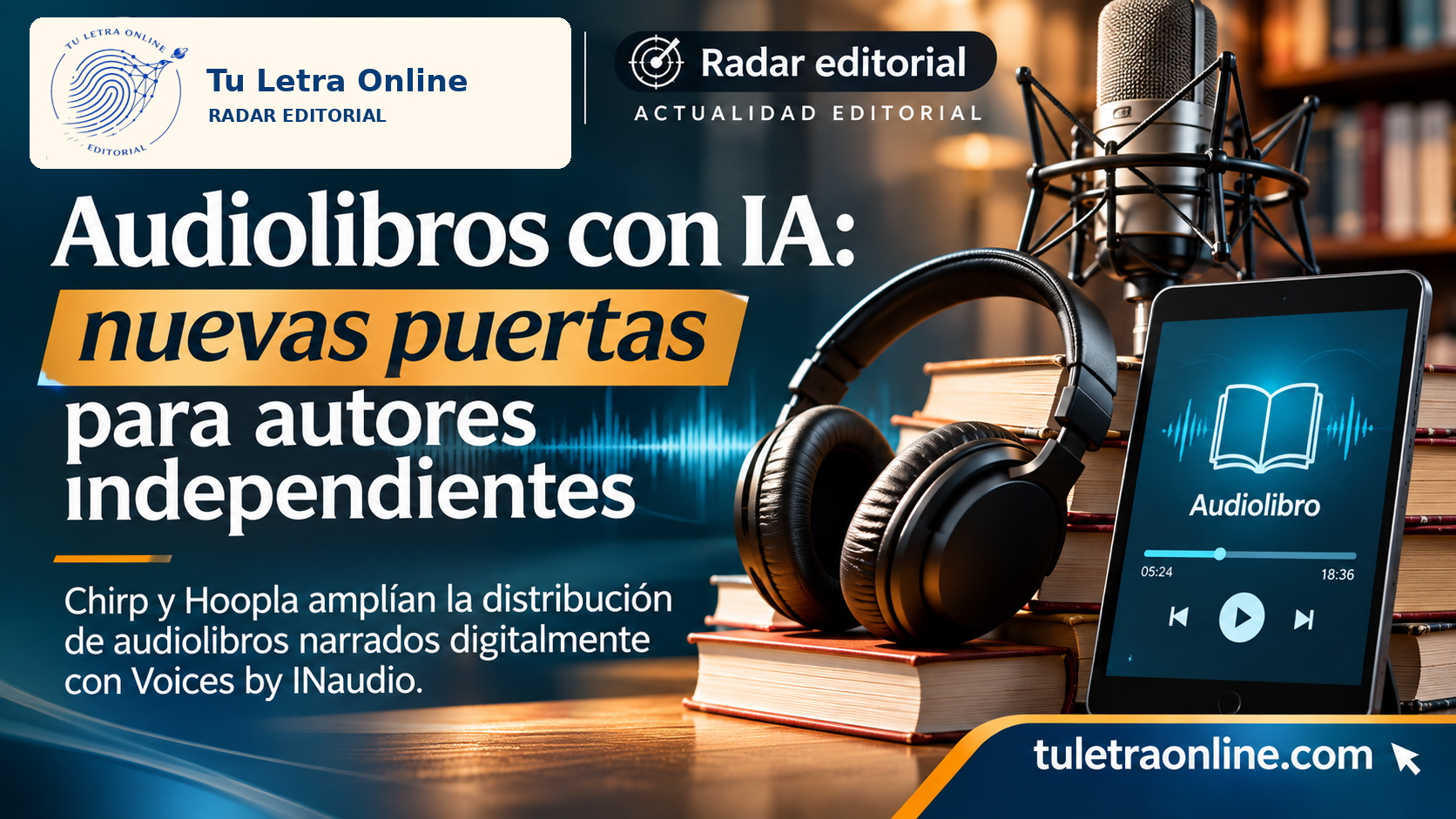
An audiobook can begin in a quiet room, with a microphone and a human voice. Today, it can also begin with a text and a digital voice. It's not just how audiobooks are made that's changing, but how they reach readers.
According to an announcement from Voices by INaudio dated 26 October 2026 and reported in the trade press, Chirp and Hoopla have begun accepting digitally narrated titles through the distributor. The announcement refers to eleven participating outlets in its network. That doesn't mean every AI-generated audiobook will be accepted, or that submissions can bypass review.
Two channels, different audiences
Chirp is a commercial audiobook platform within the BookBub ecosystem. Its help pages confirm that it accepts titles through distributors such as INaudio and Author’s Republic. A catalogue listing doesn't guarantee a featured promotion: those campaigns are subject to editorial selection.
Hoopla serves libraries and their users. Its participation offers a route to listeners beyond individual sales, though its catalogue remains curated. Under INaudio's published rules, Hoopla doesn't accept bundled collections as a single release, requires a running time of more than twenty minutes and restricts certain types of content.
A digital voice isn't just another audio file
“Voices by INaudio” defines digital narration as synthesised speech, text-to-speech and cloned voices, including authorised replicas of an author's own voice.
For its digital narration distribution service, it currently accepts only original, unmodified LPF packages generated by Google Play Books, ElevenLabs or Spoken Press. An MP3 can't replace that package, whatever tool was used to make it.
The distributor requires the narration type to be declared accurately, adds a notice for listeners and may reject or remove titles falsely presented as human-narrated. It also requires the necessary rights to both the text and the voices used.
What happens to titles already published?
The announcement reproduced by The Publishing Times says that existing digitally narrated titles in Voices would be added to the new channels automatically, with an option to opt out through the distributor's dashboard.
Rights holders should check their settings to make sure they want their titles distributed through these channels. Each platform has the final say on acceptance, based on its policies, territories and technical requirements. INaudio notes that a title can take weeks to appear and that selecting a channel doesn't guarantee a listing.
The literary question: who gives the performance?
The news has aesthetic as well as economic implications. A human voice interprets silences, ambiguities, irony and shifts in rhythm. A synthetic voice can bring audiobook production within reach of authors on limited budgets, but it still needs direction and a critical ear.
Not every book makes the same demands. A practical guide, a short-story collection, a poetry collection and a novel with multiple voices each call for different decisions. Technically clean narration doesn't necessarily make for an accomplished literary performance.
Nor should the growth of digital narration obscure the work of voice actors, directors, engineers and producers. The two approaches can coexist more fruitfully if listeners know what they're hearing and creators retain a say.
What Tu Letra Online can learn
For an independent publisher, this change is an invitation to consider pilot projects: choose a work whose audio rights are clear, compare a human-narrated sample with a digitally voiced one, assess pronunciation and expression, and weigh production and distribution costs against potential revenue before expanding the catalogue.
For works in Spanish, accents, proper names, pauses, dialogue and regional varieties need particular attention. The aim shouldn't be to produce more titles at any cost, but to offer a listening experience worthy of the text.
Authors also need to understand which rights they're granting, how the narration is labelled and what limits the platforms impose. Distribution policies change, so it's worth checking them before signing a contract or starting production.
A new way in, not the last word
Chirp and Hoopla offer two additional routes for certain digitally narrated audiobooks distributed by “Voices by INaudio”. This widens the options, but it doesn't make synthetic narration a universal answer.
In which genres would we accept a digital voice, and where would we prefer a human performance? What should listeners be told before they choose? How can independent publishers innovate without diminishing the artistic work involved?
At Tu Letra Online, we invite narrators, authors and readers to share their experiences and make the case for differing views. Literature changes, too, when the way we listen to it changes.
- audiolibros
- inteligencia artificial
- chirp
- hoopla
- inaudio
- edición independiente
- narración digital
- derechos de autor