Isabel Allende and the Premio Planeta: what do we expect from a literary prize?
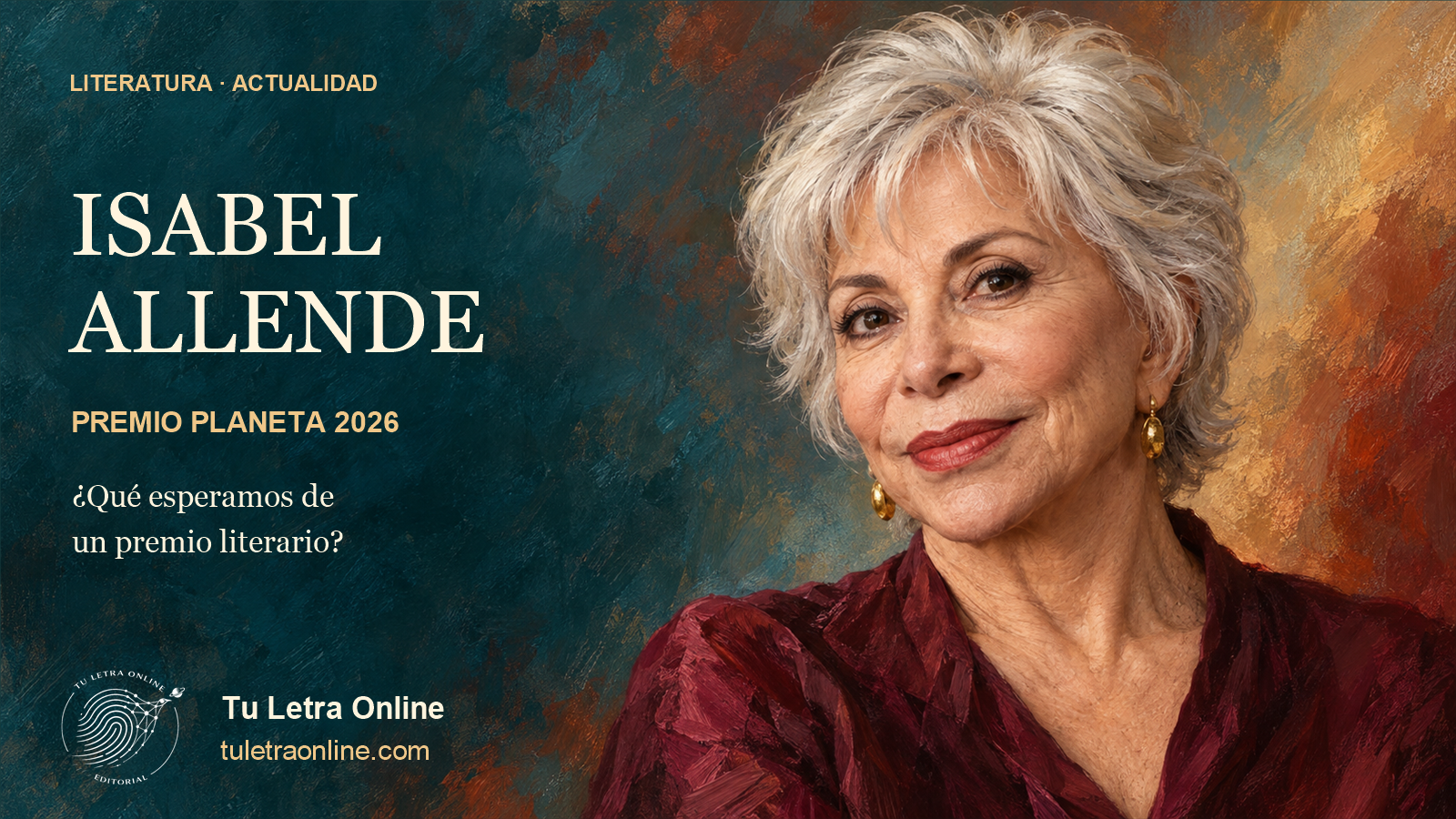
The author’s win with The Hour Before Dawn has sparked a debate that reaches beyond the novel itself: how recognition, a change of publisher and readers’ expectations fit together. The competition rules help distinguish legitimate questions from unsubstantiated suspicions.
One reader spots a band around a book announcing a prize. Another recognises the name of their favourite writer. A third notices the publisher’s imprint and realises something has changed. All three are looking at the same book, but they’re not quite reading the same news.
The 2026 Premio Planeta brings those differences into focus. Isabel Allende won on 15 October with The Hour Before Dawn. Sergio Hernández Carrasco was the runner-up with Longing. The organisers confirmed both results in the prize’s 75th-anniversary year. RTVE corroborated the news. Official announcement and RTVE coverage.
For our community of writers and editors, the interesting conversation begins after the announcement: what does a prize promise, and what do we expect it to deliver?
An author moves to a new publishing house; her history doesn’t vanish
Editorial Planeta will publish the new book after Allende’s long association with Plaza & Janés, a Penguin Random House imprint. In response to enquiries from Europa Press, PRH sources said they respected the decisions of their authors and agents and spoke appreciatively of the years they’d worked with Allende. That’s the public position reported by the news agency; we don’t know the terms of their private agreements. Statements to Europa Press, 16 October.
The relationship between an author and a publisher is both personal and professional. It can encompass years of conversations, revisions, risks taken and readers reached. It also means reviewing the terms of each project and deciding who to work with on it. A fair discussion of a move needs to distinguish that relationship from what a particular contract permits or requires.
We don’t have access here to Allende’s private documents. So there’s no basis for inferring a breach of contract or treating gratitude as an obligation to stay. We can, however, ask how an author and publisher should communicate to preserve their relationship when they part ways.
What the rules say
The Premio Planeta does more than confer an honour. The 2026 rules set the prize money at one million euros for the winning novel and €200,000 for the runner-up, and make both awards conditional on granting rights to Editorial Planeta. Clause six sets out a fifteen-year period of exclusivity from the date the contract is signed, within the scope specified there. Official rules, clauses five and six.
That matters when we consider the competition: its own terms tie recognition to the subsequent exercise of publishing rights. A commercial dimension isn’t, in itself, evidence of anything improper. It does mean that we should also examine the award as a literary decision with business consequences.
For anyone submitting a manuscript, that connection deserves as much attention as the prize money. Before picturing the ceremony, it’s worth reading what’s on offer, what you’re agreeing to and what’s envisaged for the work. The information is in the rules; public debate becomes more precise when it starts there.
Between celebration and suspicion, there’s room for an argument
The choice divided opinion. On 16 October, LA NACION reported both celebrations of the award and criticism of the prize’s commercial character and the change of publisher. Those responses document a controversy; they don’t prove the result was decided in advance. Report on the debate.
Nor is there any inherent contradiction between popular success and literary merit. A well-known author can write a great book. An unknown author can too, and may need opportunities to find readers. The question is what we want each prize to do: discover writers, recognise achievement, broaden a conversation or combine those aims.
If we’re looking for discovery, we’ll value openness to new voices. If we want a reading recommendation, we’ll want to know what the judges admired in the work. If we want to understand the industry, we’ll also need to look at publication and promotion. These are different expectations, and it helps to spell them out.
The novel still deserves to be read on its own terms
According to the publisher’s description, The Hour Before Dawn returns to Alba Trueba and the world of The House of the Spirits. The Spanish catalogue entry gives a publication date of 4 November 2026. This article therefore examines the prize and its context; it isn’t a review based on a full reading of the novel. Official book page.
At Tu Letra Online, we believe the conversation should leave room for that future reading. Publicity can spark interest; debate can scrutinise the terms on which recognition is granted. Then it’ll be time to open the book and make our case from its pages. The prize will be part of its story, but we’ll have to read it and make up our own minds.
- What do you want from a literary prize: a new voice to discover, recognition for an author’s career or a good reading recommendation?
- What information about selection and publication would give you more confidence as a reader or entrant?
- How should an author and publisher look after their relationship when they decide to part ways?
Share your experience, make your case and disagree respectfully. We want to talk about the book and the conditions that bring it to its readers.
- Isabel Allende
- Premio Planeta 2026
- premios literarios
- edición
- La hora antes del alba
- lectores
- industria editorial.